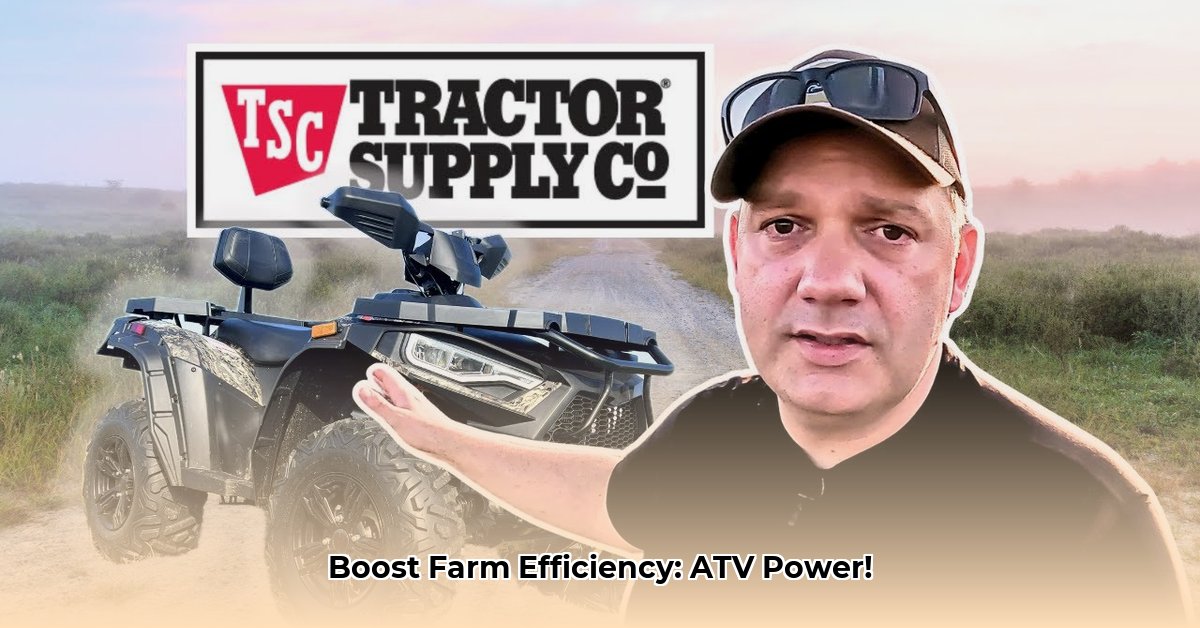
Farming demands efficiency and sustainability. Tractor Supply ATVs offer a compelling solution, boosting productivity while minimizing environmental impact. This guide explores their applications in precision farming, emphasizing responsible use for optimal results. For more on small tractors, see this helpful guide: Small Tractor Guide.
Optimizing Farm Operations with ATVs
ATVs significantly streamline farm tasks, offering substantial time and fuel savings. A quick trip to a remote pasture or a rapid response to a field issue becomes significantly faster and more efficient compared to using a larger tractor. This efficiency translates to healthier crops and happier livestock, leaving you with more time for crucial tasks. The considerable reduction in fuel consumption also lowers operational costs and reduces your farm's carbon footprint. But is this efficiency truly sustainable? Let's delve deeper.
Precision Farming: Targeted Application and Data Collection
Modern agriculture relies heavily on precise data-driven techniques. Equipped with the right tools—GPS-guided sprayers, for instance—ATVs become invaluable assets in precision farming. Imagine applying fertilizers or pesticides with pinpoint accuracy, minimizing waste and reducing environmental impact. This targeted approach lowers chemical use, saves money, and boosts crop yields. Could this be the key to maximizing efficiency while minimizing resource consumption? Further, some farmers use ATVs to monitor soil conditions and crop health, collecting valuable data to improve future agricultural decisions. This is not simply about faster transportation; it's about optimizing every aspect of sustainable agriculture.
Versatile Adaptability: Expanding ATV Capabilities
The true strength of Tractor Supply ATVs lies in their remarkable versatility. Beyond simple transportation, they become adaptable workhorses through the addition of attachments. Need to spread fertilizer or perform small-scale tillage? Attachments are available for these and many other tasks. Some farmers even use them to haul small loads of supplies or tools. This flexibility minimizes the need for multiple specialized pieces of equipment, contributing to both cost savings and efficient space management on the farm.
Environmental Considerations: Minimizing Soil Compaction and Emissions
While ATVs offer numerous benefits, potential drawbacks require consideration. Soil compaction is a valid concern, especially on wet or delicate soils. However, using the right tires, avoiding excessive weight, and employing responsible driving techniques can mitigate this risk significantly. The rise of electric ATVs further enhances sustainability, radically reducing emissions and promoting a greener farming future. Research into the long-term effects of ATV use on soil health continues to refine sustainable farming practices.
The Economic Equation: Return on Investment
While the initial cost of a Tractor Supply ATV is a significant investment, a comprehensive financial assessment reveals long-term benefits. The reduced labor costs, minimized waste from precision applications, and increased efficiency often lead to a notable return on investment within a relatively short period. A meticulous financial analysis should consider fuel, labor, and maintenance costs alongside potential yield increases, determining the overall economic viability for your specific farm operation.
Your Step-by-Step Guide to ATV Integration
Integrating ATVs effectively requires a structured approach:
Assess Your Needs: Carefully identify the tasks the ATV will perform. Consider your farm's terrain and the weight of attachments. This detailed analysis will determine which model best fits your needs.
Research and Compare Models: Thoroughly research Tractor Supply and other retailers' ATV models. Compare features, specifications, and prices to find the optimal balance of capability and cost.
Develop a Comprehensive Budget: Determine the total cost, including the ATV price, attachments, and potential maintenance expenses. Explore financing options if needed.
Prioritize Safety Training: Ensure you and all operators undergo comprehensive safety training before operating the ATV. This is crucial for prevention of accidents and injuries within the operation.
Establish a Rigorous Maintenance Schedule: Regular maintenance is essential for longevity and prevents costly breakdowns. Establish a detailed schedule and adhere to it diligently. This ensures peak performance and minimizes downtime.
Weighing the Pros and Cons: An Informed Decision
A balanced assessment of advantages and disadvantages is crucial before investing:
| Pros | Cons |
|---|---|
| Increased efficiency and productivity | Initial purchase price |
| Reduced transportation time and fuel consumption | Potential for soil compaction (mitigable with proper techniques) |
| Versatility and adaptability with attachments | Requires regular maintenance |
| Potential environmental benefits (electric models) | Operator needs proper training for safe and efficient use |
| Lower labor costs | Limited payload capacity compared to larger farm equipment |
| Improved precision farming capabilities | Potential for noise pollution with gas-powered models |
| Reduced pesticide and fertilizer waste, minimizing environmental effects | Requires careful planning of routes to avoid unnecessary ground disturbance |
The decision to invest should be based on a thorough evaluation of your farm's unique needs, considering resources, operating conditions, and long-term goals. Consult with agricultural experts for personalized guidance. Continuously update your knowledge on sustainable farming practices relevant to ATV usage.
Reducing ATV/UTV Environmental Impact: Sustainable Practices
Sustainable farming demands minimizing the environmental impact of all equipment. Here's how to reduce the footprint of your ATVs and UTVs:
Prioritize Electric or Hybrid Models: Electric or hybrid ATVs significantly reduce emissions. While generally having a higher initial cost, the long-term environmental and economic benefits are considerable.
Strategic Route Planning: Avoid unnecessary travel by strategically planning routes and utilizing existing trails whenever possible. This reduces fuel consumption and minimizes ground disturbance.
Responsible Speed Control: Maintain appropriate speeds based on terrain for fuel efficiency and soil conservation. Excessive speed increases both fuel consumption and the risk of erosion.
Regular Maintenance is Crucial: A well-maintained vehicle runs more efficiently, decreasing fuel consumption and emissions while extending its lifespan, thus reducing waste.
Targeted Applications for Precision: Utilize ATVs for tasks that benefit from precision application of chemicals, such as targeted spraying or fertilizer placement. This targeted usage minimizes chemical waste and protects environmental resources.
Proper Storage: Effective storage prevents spills and leaks, protecting the environment from harmful contaminants. Consider using fuel stabilizers if necessary.
By implementing these strategies, you actively contribute to a more environmentally responsible and sustainable agricultural operation. The combination of efficient technology and responsible practices forms the core of thriving, sustainable farming.